Insights compiled by Jake Kilgore, Director of Sales & Business Development.
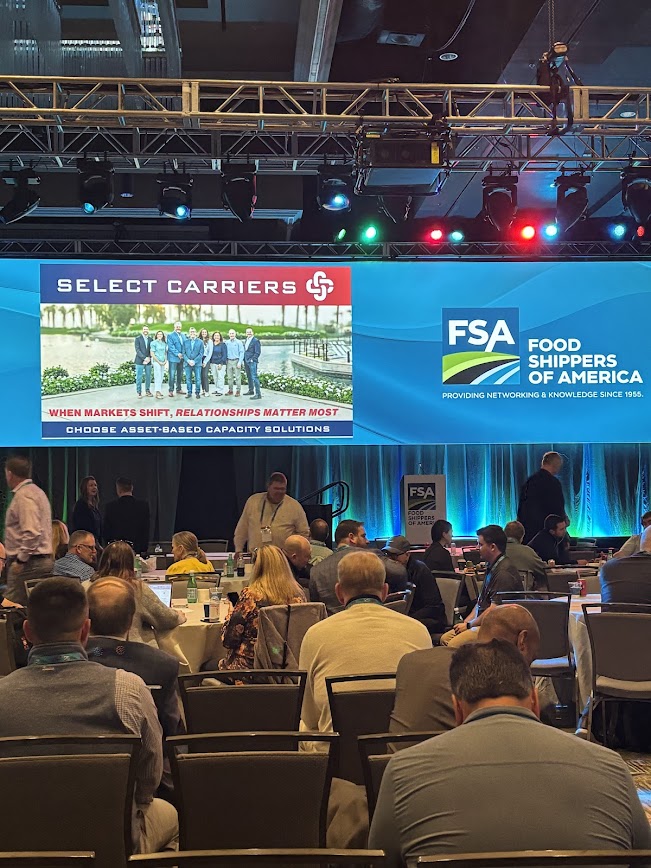
Earlier this month, our own Jake Kilgore joined industry leaders at the Truckload Carriers Association Refrigerated Meeting in Colorado Springs.
The conversations were brisk, the data eye-opening, and the message clear: 2025 is a hinge year for cold-chain strategy. Below is an expanded look at the 14 trends Jake brought back—plus why each matters to shippers and asset-based carriers alike.
1. Major Shift in California Regulations
The near-elimination of the California Air Resources Board (CARB) reefer rulebook removes one of the most expensive compliance burdens in U.S. trucking. Carriers running in and out of the state can now retire costly retrofit plans, allocate capital elsewhere, and quote California freight with fewer “green premiums.”
Shippers should keep an eye on contract renegotiations—latent regulatory cost baked into legacy rates may finally unwind, presenting room for savings or network re-optimization on West-Coast lanes.
2. Broker Market Is Changing—But Slower Than Expected
Yes, small brokers are closing, but the anticipated mass shake-out hasn’t happened yet. Large 3PLs are doubling down, adding headcount, and automating back-office functions to retain share.
For shippers, this means traditional brokerage capacity isn’t disappearing overnight—but margin stacks are unlikely to shrink. Select Carriers’ direct shipper-to-carrier model remains a hedge: even if big brokers thrive, you still control rate discovery and keep more yield inside your network.
3. GLP-1 Drugs Are Quietly Changing Food Freight
With 12 % of Americans now on GLP-1 medications and average calorie intake dropping 31 %, food shippers are staring at a structural demand shift.
Expect softer volumes for calorie-dense SKUs, changing mix at DCs, and unpredictable seasonality curves. Carriers can offset volatility by courting producers of high-value perishables (meats, ready-to-eat produce, premium dairy) whose demand is less elastic to calorie count.
4. Farm-to-Table Food Boom
Farm-to-table dining now commands 35 % of restaurant meals—triple its 2020 share. That growth favors shorter, high-velocity regional hauls where freshness is everything.
Carriers with live-load agility and strong produce handling credentials are poised to capture dedicated loops. Shippers should revisit routing guides for opportunities to skip national DCs and move product straight from field to local kitchens.
5. Produce Shifts from California to Mexico and Texas
Mega-farms in Baja California, Sinaloa, and the Rio Grande Valley now outpace California’s Central Valley in fruit and vegetable output. The shift redirects reefer demand toward border crossings, the Gulf Coast, and I-10 corridors.
Carriers expanding cross-border fleets or adding bilingual dispatch will gain early mover advantage; shippers may shorten lead times by dual-sourcing produce closer to demand centers in the Southeast and Midwest.
6. Remote Work Is Reshaping Food Freight Patterns
Persistent work-from-home culture continues to depress weekday lunch traffic in urban cores. Food distributors are pivoting to suburban micro-fulfillment and smaller, more frequent orders for grocery e-commerce.
For carriers, that means more multi-stop regional runs, tighter appointment windows, and an uptick in lift-gate requirements. Shippers that align inventory nodes with the new population map will protect service levels and reduce stem mileage.
7. Reefer Outpacing Dry-Van Demand
Cold capacity remains the tightest corner of the market, driven by perishables growth and seasonal spikes.
Dry-van carriers exploring refrigerated conversions can diversify revenue, but must invest in training, trailer maintenance, and temp-tracking tech.
Shippers locking in multi-quarter reefer contracts now will avoid the scramble—and price spikes—of produce and holiday surges.
8. Contract vs. Spot Rates Narrowing
After two years of historic divergence, reefer spot and contract rates are finally converging. For carriers, the contraction reduces the temptation to chase the spot market at the expense of relationships.
Shippers stand to benefit from budget predictability—provided they secure capacity before the next demand rebound pushes spot back above contract.
9. Tractor Demand Down—Even Before Tariffs Hit
OEM backlogs are thinning and orders are soft as fleets postpone capital spending ahead of tariff-driven cost increases.
A smaller inflow of new iron means the average tractor age will rise, potentially elevating maintenance risks and road-failure incidents.
Shippers should lean on partners with robust preventative maintenance programs; carriers should adopt data-driven PM schedules to offset aging fleets.
10. Efficiency Is Non-Negotiable for Carriers
The carriers winning RFPs in 2025 boast live-load agility, sub-1 % idle time, and empty-mile ratios under 12%.
They also cultivate tight vendor relationships for tires, parts, and refrigerated fuel, mitigating cost inflation.
Select Carriers screens for these KPIs so shippers get high-performing fleets on day one—and carriers gain premium freight that rewards operational discipline.
11. Longer Equipment Lifespans
Trailers once flipped every 4–5 years now remain in service 7+ years. Extended asset life maximizes ROI but demands vigilant upkeep of insulation, flooring, and reefer units.
Carriers should budget for mid-life refurbishments; shippers must verify trailer-age policies on temperature-sensitive loads to protect product integrity.
12. Tariffs Creating Headwinds
Metal and component tariffs continue to raise equipment and parts costs, while cross-border produce faces new duty chatter. Both trends pressure operating ratios.
Fleet managers may need to rebalance capital budgets—or form collaborative buying pools—to keep equipment modern without crushing cash flow.
Shippers should monitor landed cost models, as tariff pass-throughs could surface in contract renegotiations.
13. Shorter Length of Haul
Dense regional DC networks and same-day e-commerce fulfillment keep shrinking average hauls.
While that reduces driver dwell and logbook risk, it also compresses revenue per trip. Carriers can defend margins by clustering loads, adopting relay models, and leveraging drop trailers for ultra-short loops.
Shippers benefit from fresher product and lower buffer stock, but should coordinate tighter dock schedules.
14. Eyes on 2026: A Freight Rebound Year?
Panel consensus suggests 2026 could usher in a capacity-tight rebound as stagnant tractor orders collide with revived consumer demand and re-shoring initiatives.
Locking in strategic partnerships now—before the pendulum swings—will secure priority capacity when the market flips.
Final Thoughts
Cold-chain logistics is entering a pivotal chapter: regulatory relief on one coast, tariff pressure on another, and seismic shifts in consumption in between. Market intelligence, operational agility, and transparent partnerships are the through-line. Select Carriers stands ready to connect shippers with asset-based fleets that meet today’s efficiency bar—and tomorrow’s capacity crunch.
Need a partner who tracks the trends and delivers the capacity?
📧 [email protected] | 🌐 SelectCarriersInc.com
Move smarter. Move cooler. Move with Select Carriers.